

Most before and after claims you find online are garbage. Blurry photos, anonymous Reddit posts, and suspiciously perfect transformations designed to sell you something. If you landed here with a healthy dose of skepticism, that instinct is correct.
But skepticism cuts both ways. Dismissing everything because some of it is fake means you might also be ignoring what legitimate, consistent users have actually documented. This piece is not here to sell you a pump. It is here to show you what the evidence actually says about penis pump before and after results, who gets them, and why most men never do.
What a Penis Pump Actually Does to Your Body
A penis pump, clinically referred to as a vacuum erection device or VED, works by creating negative air pressure around the penis. That pressure draws blood into the erectile tissue, causing engorgement that is noticeably fuller than a natural erection for many men.
The basic mechanism is well understood. Vacuum pressure pulls blood into the corpora cavernosa, the two chambers that fill during an erection. Repeated sessions may also create micro-level stress on penile tissue, similar in concept to how any repeated physical stress on tissue can produce adaptation over time.
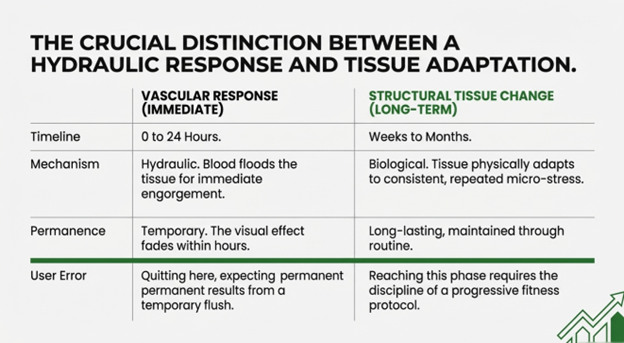
Here is the distinction most men miss, and the one that causes the most confusion.
Vascular response vs. tissue change are two completely different things.
The vascular response is immediate. Blood floods in, the erection appears fuller, and the effect fades within hours. This is hydraulic, not structural. Tissue change, on the other hand, is the slow adaptation that occurs over weeks and months of consistent work. Men who conflate these two expect permanent results from something that only produced a temporary effect. They quit early, call it a scam, and move on.
Why Most Men Think Penis Pumps Don’t Work (And Why That’s Partially Correct)
The skeptics are not entirely wrong. Casual, inconsistent use of a penis pump produces essentially nothing beyond the immediate engorgement that disappears the same day.
Add to that the flood of low quality before and after photos that circulate online. Many are fabricated. Others show results from users who started with significant erectile dysfunction, meaning the pump restored function they had lost rather than building on a healthy baseline. Neither scenario tells you much about what a healthy man with a consistent protocol can expect.
There is also the device quality problem. There is a significant difference between a medical grade VED and a cheap novelty pump purchased online. VEDs have FDA recognition for treating erectile dysfunction. They are used in urology practices, prescribed post prostate surgery, and have a legitimate clinical track record. The ten dollar pump with no pressure gauge is a different product entirely.
So yes, for most men using low quality devices inconsistently, pumps do not work. That part of the skeptic’s position is accurate. The question is whether that describes all pump use, and the answer is no.
Temporary Results vs. Permanent Gains: What the Timeline Actually Looks Like
Understanding pump results means understanding that different timeframes produce completely different outcomes.
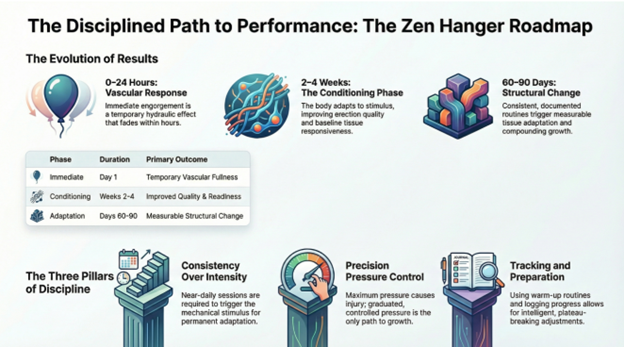
Immediate (0 to 24 Hours)
Right after a session, most men notice a noticeably fuller appearance and improved erection quality. For men managing erectile dysfunction, this immediate effect has real practical value. For men focused on size, this window tells them almost nothing about long term potential. The effect is vascular. It fades.
Short Term (2 to 4 Weeks of Consistent Use)
With regular sessions, most users report improved erectile quality over their baseline. Some note reduced refractory time. The tissue begins to respond more readily to the vacuum pressure. Think of this as a conditioning phase. The body is adapting to the stimulus, but structural changes have not yet occurred.
Medium Term (60 to 90 Days of Documented Routine)
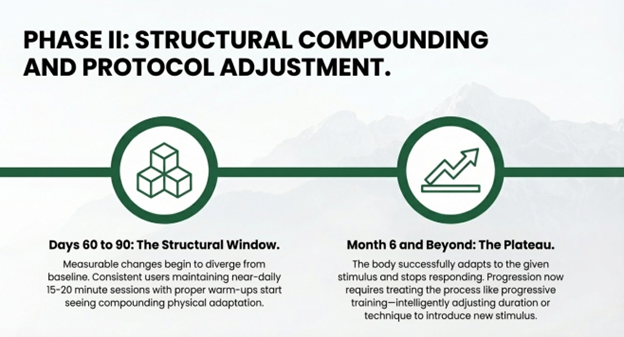
This is where the picture starts to change for consistent users. Documented penis pump before and after photos from consistent users show gradual gains that compound over 60 to 90 day periods. This is the window where structural adaptation begins to appear in users who have maintained frequency, controlled pressure, and proper warm up protocols.
What does consistent actually mean here? It typically means near daily sessions of 15 to 20 minutes, moderate and graduated pressure rather than maximum pressure, and warm up and cool down routines that prepare tissue for the work.
Long Term (6 Months and Beyond)
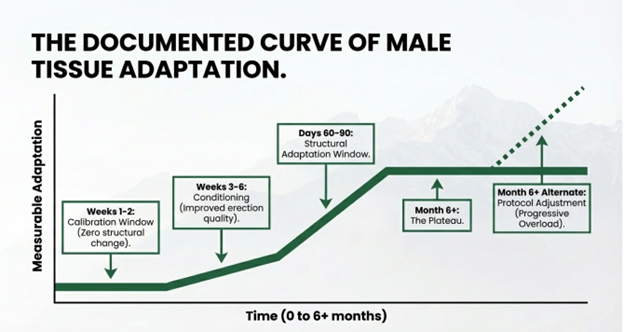
Without adjusting the protocol, most users hit a plateau. The body adapts to a given stimulus and stops responding to it. Men who continue seeing results past the six month mark are typically those who have treated the process like progressive training, gradually increasing duration or adjusting technique rather than running the same routine indefinitely.
Most men quit before this window opens. That is a significant reason why long term result data is harder to find.
Real Timelines From Documented Users: What the Data Shows
Rather than isolated anecdotes, looking at patterns across documented users gives a more honest picture of what realistic timelines look like.
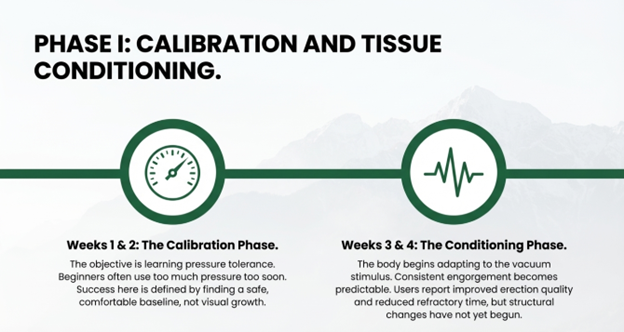
Weeks 1 and 2: Most users spend this period learning their pressure tolerance. Many use too much pressure too soon, experience discomfort, and either quit or scale back. This phase is almost entirely about calibration.
Weeks 3 through 6: Consistent engorgement response becomes predictable. Erection quality improvements become noticeable. Users who track their sessions start to see patterns.
Weeks 7 through 12: This is where the first measurable changes appear for users who have been genuinely consistent. Not dramatic changes, but documented ones. Length and girth measurements taken before and after the full period begin to diverge from baseline.
Months 4 through 6: Without protocol adjustment, results plateau. Users who adapt their routine continue progressing. Those who do not stall here.
What Separates Men Who See Results From Those Who Don’t
The gap between men who document results and men who see nothing is almost entirely explained by four variables.
Consistency is the largest factor. Near daily sessions outperform sporadic ones by a significant margin. The tissue adaptation process requires repeated stimulus.
Pressure control is the second. Maximum pressure is not optimal pressure. Overpressure causes injury, bruising, and tissue damage that sets progress back. Controlled, graduated pressure produces adaptation.
Warm up and warm down routines matter more than most beginners expect. Prepared tissue responds better and recovers faster.
Tracking is the fourth factor. Men who measure, log sessions, and review progress adjust their protocols intelligently. Men who go in blind have no way to know what is working.
Variables That Affect Individual Outcomes
Starting baseline plays a role. A man using a pump primarily to address erectile dysfunction will measure success differently than someone focused purely on size.
Device quality affects results directly. A properly calibrated medical grade device with a pressure gauge is a fundamentally different tool than a novelty product.
Age and tissue elasticity matter. Younger tissue tends to respond more readily, though consistent older users still document results.
Lifestyle factors including circulation health, sleep quality, and testosterone levels all influence how tissue responds to any training stimulus.
Penis Pump Myths That Are Killing Your Results
Myth 1: You need maximum pressure for maximum gains.
False. Overpressure does not accelerate gains. It causes bruising, burst blood vessels, and tissue damage that interrupts your protocol and delays results.
Myth 2: Results are permanent after one month.
False. One month is still in the conditioning phase for most users. Structural changes require the 60 to 90 day window at minimum, and maintenance is required to keep them.
Myth 3: Before and after photos online represent typical results.
Mostly false. Outlier results dominate social proof because they are more shareable. The dramatic transformations are the exception, not the baseline expectation.
Myth 4: Pumps work the same way pills or surgery do.
False. These are completely different mechanisms. Pills affect blood flow chemistry. Surgery alters anatomy. Pumps work through repeated mechanical stimulus over time. Comparing expected timelines across these methods makes no sense.
Myth 5: If it has not worked in two weeks, it does not work.
False. Two weeks is still the calibration and conditioning phase. The 60 to 90 day window is where meaningful before and after data begins to appear in documented users.
Who Actually Benefits From a Pump and Who Doesn’t

Pumps have the strongest evidence base for men using them for erectile function. Men managing ED, men in post prostate surgery recovery, and men who have noticed declining erection quality over time are the clearest candidates for real benefit.
Men pursuing size changes specifically need to understand the commitment involved. Results in that category require 60 to 90 days of genuine consistency at minimum, proper equipment, and a methodical approach. Casual use will not produce them.
Poor candidates include men expecting results in under a month, men unwilling to track their progress, and men using cheap novelty devices without pressure controls. The variables that drive results are all within a user’s control, but they require actual effort.
The Honest Bottom Line
Penis pumps produce real results for consistent users within documented timeframes. That is the honest summary. They are not magic. They do not work overnight. They will not produce dramatic transformations from two weeks of casual use.
What they can do, for men willing to commit to a proper protocol over 60 to 90 days with the right equipment, is produce gradual and compounding changes that casual users never get close to seeing.
Skepticism is the right starting point. So is following the evidence past the point where it gets inconvenient for a clean narrative. If you are going to invest time in a protocol, start by looking at what documented, consistent users have actually recorded. The data is more useful than the marketing, in either direction.