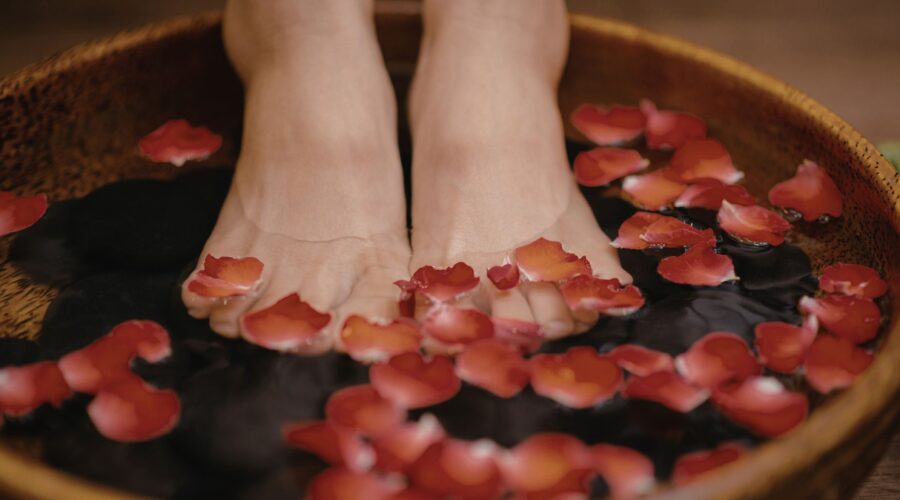
Scroll through Chinese social media or watch a few Chinese TV dramas, and you’ll probably notice a small nightly habit: people soaking their feet before bed. For some households, it’s simply part of the evening routine. But if you’re seeing it for the first time, it might seem unusual. Why soak your feet in warm water before sleep? Is it just a comforting habit, or does something actually happen in the body?
The answer sits somewhere in between. In recent years, researchers have taken a closer look at warm foot soaking. The effects are not only about comfort or relaxation, warm water applied to the feet during a warm foot soak can influence circulation, nervous system activity, and the body’s temperature rhythm — all of which play a role in how the body prepares for rest.
What Happens to the Body During a Warm Foot Soak?
Foot soaking may look simple, but the body begins responding within minutes. Warm water around the feet triggers several physiological changes that gradually shift the body toward a calmer state.
Peripheral circulation and warmth
One of the first responses happens in the circulatory system. When the feet are immersed in warm water (usually around 40–42 °C), blood vessels in the lower legs begin to dilate. This process, known as thermal vasodilation, allows blood to move more easily through the capillaries of the feet and lower limbs.
Because the feet are far from the heart, circulation there tends to slow more easily. Warmth helps relax vascular tension, allowing blood to flow more freely through nearby tissues. Many people notice that heaviness in the legs or the feeling of cold feet improves after a short foot soak ritual. This improved peripheral circulation is one of the reasons warm foot baths have traditionally been used to restore warmth to the body after long periods of sitting or standing.
Nervous system regulation
The feet contain a dense network of sensory nerve endings. When warm water surrounds the skin, thermal receptors send signals through the peripheral nervous system toward the brain.
These signals influence the autonomic nervous system, which regulates involuntary processes such as heart rate, breathing, and digestion.
Warm stimulation at the extremities tends to increase activity in the parasympathetic nervous system — the branch associated with rest and recovery — while reducing sympathetic activity, which is linked to stress and alertness. As this shift happens, breathing becomes steadier and the body gradually moves toward a calmer physiological state.
This is one reason a warm foot soak often feels like a quiet reset after a long day.
Body temperature rhythm and sleep signals
Another important mechanism involves thermoregulation, the way the body manages internal temperature.
Human sleep cycles are closely tied to temperature rhythms. In the evening, the body prepares for sleep by gradually lowering its core temperature. This drop acts as a biological signal that it is time to rest.
Warming the feet can help accelerate this process. When the extremities warm, blood vessels dilate and allow heat to move from the body’s core toward the skin. After the soak ends, heat dissipates outward, allowing core temperature to fall more easily. Research on passive body heating suggests that warming the extremities before bedtime can help shorten the time it takes to fall asleep by supporting the body’s natural temperature regulation (1).
The effect isn’t sedating like medication. Instead, warmth simply supports the body’s natural evening shift toward rest. A full warm bath can have similar effects, but warming the feet alone is often enough to trigger many of the same circulatory and relaxation responses.
Is the Effect Physical or Psychological?
At first glance, the benefits of foot soaking might seem mostly psychological. Sitting quietly with warm water and stepping away from daily stress is inherently relaxing.
But the effects are not purely subjective. Recent research suggests that warm foot bathing before bedtime may support the body’s transition toward sleep by influencing autonomic nervous system activity and relaxation responses (2). At the same time, the ritual itself matters. Repeating a calm evening activity — dim lights, warm water, quiet time — gradually conditions the nervous system to associate that sequence with rest. Because of this interaction, the benefits likely come from both physiology and behavior working together.
Why Foot Soaking Became a Traditional Habit in Chinese Medicine
Foot soaking has been part of everyday wellness routines in China for centuries. In many households, warming the feet in a basin of hot water is a familiar habit people grow up with.
The tradition is closely connected to how traditional Chinese medicine (TCM) understands the body and the role of the feet. In TCM theory, the feet are sometimes described as “the roots of the body.” Of the twelve primary meridians described in classical Chinese medicine, six either begin or pass through the feet.
From a practical perspective, the feet sit at the lowest point of the body and are farthest from the heart, yet they carry the body’s full weight throughout the day. Because circulation in the extremities can weaken easily, traditional practitioners often describe the feet as having relatively less Yang energy — meaning they benefit from additional warmth. An important acupuncture point called Yongquan (Kidney-1) lies on the sole of the foot. In TCM theory, the kidney system represents the body’s foundational warmth and vitality. Keeping the feet warm is therefore believed to support overall balance. Traditional teachings also suggest that cold entering through the feet can travel upward along the leg’s yin meridians — the spleen, liver, and kidney channels — potentially affecting circulation and internal balance.
Modern physiology explains these processes differently, but the observations overlap in interesting ways. Reduced warmth in the lower body can influence peripheral circulation, and in women it may also affect pelvic circulation, and this is why Chinese people are used to drink warm water.
For this reason, warm foot baths have long been used as a self-care practice for menstrual comfort, particularly for people described in TCM as having a “cold constitution.” Sometimes herbs are added to the water. Ingredients with warm nature such as ginger, mugwort, or Sichuan peppercorn are traditionally used to enhance the warming effect of the soak.
Even today, foot soaking remains a familiar evening habit in many Chinese homes.
Why Foot Soaking Is Usually Done at Night
Foot soaking is rarely practiced in the morning. Evening routines tend to focus on slowing down rather than increasing activity, and warmth fits naturally into this phase of the day. Warm water helps the nervous mind shift toward relaxation, making it easier for the body to move from daytime alertness into nighttime recovery.
For many people, the practice functions less as a treatment and more as a transition ritual — a quiet signal that the active part of the day is ending. For those who want to try it themselves, learning how to soak your feet properly can help ensure the water temperature, timing, and duration are appropriate.
Practical Guidelines: Temperature, Duration, and Timing
Research and safety guidelines suggest several simple parameters.
- Water temperature: about 40–42 °C. Lower temperatures feel pleasant but produce weaker physiological effects, while higher temperatures increase the risk of skin irritation.
- Duration: about 20 minutes is generally sufficient.
- Water level: ideally above the ankles and into the lower calf.
Foot soaking is usually done one to two hours before sleep, rather than immediately after meals.
Adjusting the Practice to Individual Needs
Warm water alone is enough for most people, but some adjust the ritual depending on preference.
- Difficulty falling asleep — calming herbs such as lavender
- Persistent cold feet — slices of ginger or warming spices
- Muscle fatigue — mineral salts with warm water
- High stress — plain warm water in a quiet, phone-free setting
Across these variations, consistency matters more than intensity.
When to Use Caution
Warm foot soaking is generally safe, but extra care is recommended for individuals with:
- diabetes or reduced temperature sensation
- severe varicose veins or a history of blood clots
- open wounds or infections on the feet
- certain cardiovascular conditions
In these cases, water temperature and duration should be adjusted carefully.
A Simple Practice, Rooted in Physiology
Warm foot soaking before bed is neither a miracle cure nor an empty superstition. Its effects come from small physiological shifts — improved circulation, nervous system relaxation, and the body’s natural temperature rhythms.
More than anything, it creates a small moment of transition, a pause between the activity of the day and the quiet of the night. The practice works slowly, through rhythm and repetition rather than dramatic intervention. Small habits like this rarely produce instant changes, but over time they help the body settle into a steadier evening rhythm. That may be exactly why such a simple habit has lasted for generations.
Resources and Further Information
Haghayegh S, et al.
Sleep Medicine Reviews, 2019
https://www.sciencedirect.com/science/article/abs/pii/S1087079218301552?via%3Dihub
Kim JH et al., 2024
Effects of warm foot bathing on sleep and autonomic function.
https://pubmed.ncbi.nlm.nih.gov/38408926/
Author
dipara is a wellness brand inspired by traditional Chinese medicine herbal practices and modern self-care rituals, with a focus on the calming experience of herbal foot soaking.
DISCLAIMER: The Site cannot and does not contain medical / health advice. The medical / health information is provided for general informational and educational purposes only and is not a substitute for professional advice. Accordingly, before seeking any form of medical advice, diagnoses or treatment based upon such information, we encourage you to consult with your GP or other qualified health practitioner. You must never disregard professional medical advice or delay in seeking it because of something mentioned on this Site. The use or reliance of any information contained on the Site is solely at your own risk.